


| Page |  |
 |
|
 |
 |
Exercise 2
1.
The moving average values for the sales from Exercise 1 are shown below
(for days 9 to 21 and days 16 to 28). Use those values, and the values you
already have from Exercise 1, to plot the moving average graph for all the
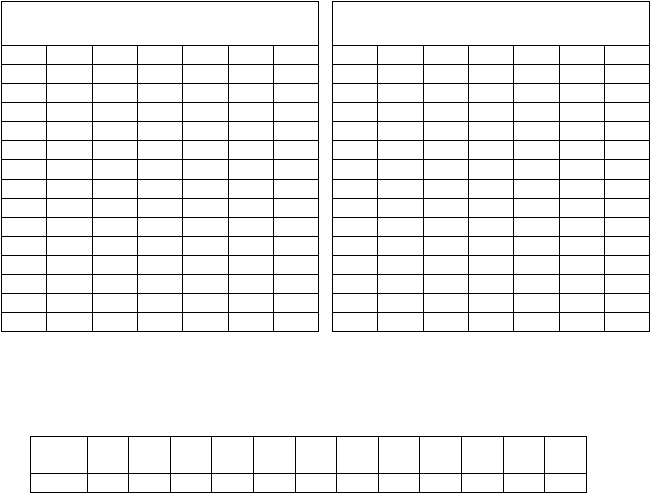
sales of milk. You are advised to begin by creating a table(s) of all the
moving average values. Draw the line of best fit.
Moving average calculations
for days 9 to 21
8
8
8
7
7
7
4
4
4
4
16
16
16
16
16
15
15
15
15
15
15
15
15
15
15
15
15
15
10
10
10
10
10
10
8
8
8
8
8
8
8
8
8
6
6
6
13
13
15
73
75
75
76
78
75
75
10.4
10.7
10.7
10.9
11.1
10.7
10.7
Moving average calculations
for days 16 to 28
10
8
8
8
8
8
6
6
6
6
13
13
13
13
13
15
15
15
15
15
15
12
12
12
12
12
12
12
13
13
13
13
13
13
9
9
9
9
9
8
8
8
8
5
5
5
15
15
19
72
75
76
76
75
77
81
10.3
10.7
10.9
10.9
10.7
11
11.6
2.
A van hire company keeps a record of how many vans were hired each month
for a year. The table below shows this information.
Month
Jan
1
Feb
2
Mar
3
Apr
4
May
5
Jun
6
Jul
7
Aug
8
Sep
9
Oct
10
Nov
11
Dec
12
Vans
10
23
36
15
17
23
45
9
14
28
49
14
You may wish to use a spreadsheet to complete some or all of this question. For
example, to plot the graphs. Otherwise plot the graphs by hand.
a) Draw a time-series line graph for the above data.
b) Using a suitable table, calculate the 4-point moving averages for this data.
c) On the original time-series graph or on a similar set of axes, plot the
moving average values and draw the line of best fit.
|
 |
|